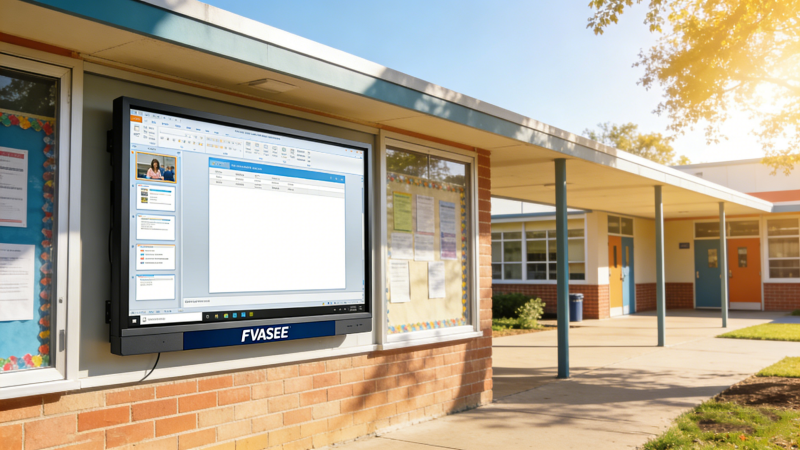
Campus Communication Display Systems for School and University Administration | FVASEE
Centralized Display Solutions Supporting Administrative Communication in Educational Environments
Efficient communication and information dissemination are vital for maintaining effective operations within schools and campuses. Administrators, faculty, students, and visitors all benefit from timely access to schedules, notifications, alerts, and institutional updates. Traditional approaches, such as bulletin boards, paper flyers, or scattered display devices, often fall short in delivering fast and consistent messaging across an entire campus.
Modern display solutions offer educational institutions a unified platform for presenting administrative information — from daily announcements and event schedules to safety alerts and policy updates. These systems help streamline communication workflows, reduce manual efforts, and ensure that the right message reaches the right audience at the right time.
FVASEE’s education administration displays are designed to support the unique needs of both K-12 schools and universities, enabling administrators to manage and broadcast critical information with clarity and ease.

Why Display Technology Matters for Campus Administration
Educational institutions generate a wide variety of administrative content — including timetables, school notices, exam schedules, visitor guidance, and safety protocols. Delivering this information efficiently requires systems that can:
Centralize Messaging Across Locations
Rather than updating multiple physical bulletin boards, administrators can post messages centrally and have them reflected instantly across digital displays throughout the campus.
Provide Real-Time Alerts and Notifications
Displays can broadcast emergency instructions, weather advisories, or unexpected schedule changes immediately, reaching students and staff wherever they are.
Offer Contextual Information by Zone
Displays in corridors, libraries, cafeterias, or auditoriums can show tailored content relevant to that space — such as meal menus, upcoming assemblies, or room schedules.
Simplify Content Updates
With intuitive management tools, administrators can create, schedule, and update display content without technical barriers, keeping communications fresh and accurate.
These capabilities help schools and universities foster clear, structured, and transparent administrative communication.
Core Features of Administration Display Platforms
Centralized Content Management System
Administrators control all messages from a unified dashboard, eliminating the need to program individual screens separately.
Zone-Specific Displays
Different buildings or areas can show customized content — such as transportation notices in entry halls or academic calendars near departmental offices.
Multi-Format Support
Displays can show text, images, video, live feeds, and interactive menus, making information delivery engaging and versatile.
Integration with Institutional Systems
Seamless connections with academic calendars, scheduling systems, alert platforms, and event portals allow displays to reflect real-time institutional data.
These features provide administrators with the flexibility and control needed to manage complex campus communication ecosystems.

Typical Use Cases in Educational Settings
Daily Announcements and Schedules
Students and faculty can quickly catch up on class changes, assembly notices, or meeting reminders displayed throughout campus.
Event Promotion and Wayfinding
Digital displays can highlight upcoming seminars, performances, or sports events, and even assist with navigation through campus maps and directions.
Safety and Emergency Messaging
In critical situations, displays serve as essential communication channels for instructions on evacuation routes, shelter-in-place alerts, or facility closures.
Academic Information Displays
Visitors and students can see examination timetables, registration deadlines, or graduation requirements without having to access separate administrative portals.
These applications reinforce the role of display systems as central hubs for timely and relevant institutional communication.
Benefits for Administrators, Educators, and Students
Improved Operational Clarity
Administrators can ensure that all stakeholders are informed consistently, reducing miscommunication and confusion.
Enhanced Engagement Across Campus
Displays placed in strategic locations help capture attention and encourage interaction with institutional content.
Faster Response to Urgent Situations
When alerts or emergency notices need to be shared instantly, digital displays provide an effective broadcast channel.
Reduced Administrative Workload
Automated scheduling and centralized management reduce manual efforts and free up staff to focus on higher-priority tasks.
These outcomes result in more cohesive, well-informed, and efficiently run campuses.
Why FVASEE’s Education Administration Displays Stand Out
FVASEE’s display platforms are tailored for institutional communication needs — offering:
Flexible Deployment Options: From hallway screens to building entrance displays, configurations suit any campus layout.
Reliable Performance: Stable operation designed for daily use in busy educational settings.
User-Friendly Management Tools: Administrators can update content with minimal training.
Visual Clarity and Accessibility: High-resolution screens ensure readability from various distances and angles.
Combined, these features help educational institutions promote transparency, engagement, and operational effectiveness.

Clear, centralized communication plays a fundamental role in the vitality of any academic environment. By adopting advanced display solutions for administrative messaging, schools and campuses can ensure information is delivered quickly, consistently, and in engaging formats. FVASEE’s education administration displays provide the visual infrastructure to support modern communication needs — making campuses safer, smoother to navigate, and more connected for students, staff, and visitors alike.