Best Portable Smart TV for Home Workouts: Flexible Fitness Display with Apps
Portable Smart TV for Home Workouts
A Flexible Fitness Display for Interactive Training, Streaming Classes, and Smarter Home Exercise
Home fitness has become a permanent part of modern lifestyles. From HIIT sessions and strength training to yoga and Pilates, more people are choosing to exercise at home instead of commuting to gyms.
However, many workout setups still rely on smartphones, tablets, or fixed televisions. Small screens reduce visibility, while traditional TVs often limit where and how you can exercise.
A portable smart fitness display offers a more practical solution. With mobility, a larger screen, and app support, it helps create a more engaging and adaptable workout environment at home. Portable smart TVs are increasingly being used for fitness classes, yoga sessions, and interactive training because they can be repositioned easily and provide a better viewing experience during exercise.
What is the best display for home workouts?
A portable smart TV is one of the most flexible options for home fitness because it combines a large screen, mobility, app access, and wireless connectivity. Unlike fixed televisions or tablets, it can be adjusted and moved to match different workout styles, training spaces, and viewing angles.
Why Traditional Screens Are Not Ideal for Home Fitness
Many people start home workouts using devices they already own. While convenient, these setups often create limitations that affect both comfort and performance.
Smartphones and tablets typically have screens that are too small for following detailed movements or instructor demonstrations. During high-intensity sessions, users often need to stop and reposition the device to maintain visibility.
Wall-mounted TVs solve the screen-size problem but introduce another challenge: lack of flexibility. Fixed screens may be too high, too far away, or positioned poorly for floor exercises, stretching routines, or yoga sessions.
As workout routines become more diverse, users need a display that can adapt to different training styles rather than forcing them to adapt to the screen.
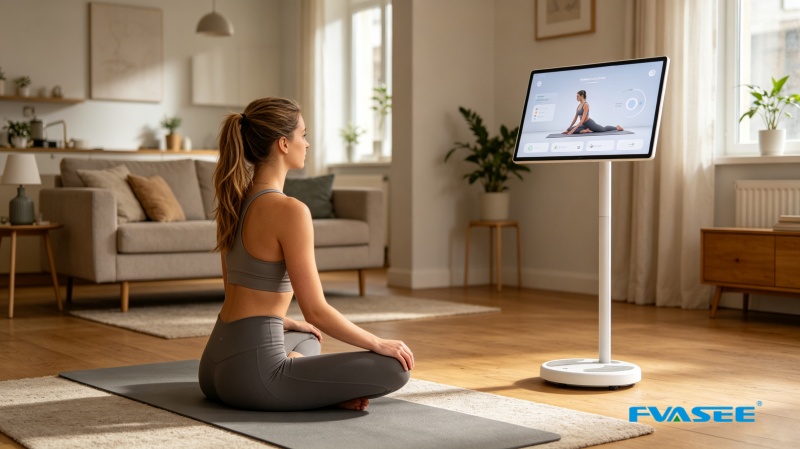
Why a Portable Smart TV Works Better for Fitness
Adjustable Viewing for Every Exercise
Different workouts require different viewing angles.
A standing cardio session, a floor-based Pilates routine, and a yoga practice all place users in different positions. A portable smart TV allows the screen to be adjusted in height, angle, and orientation, ensuring clear visibility throughout the workout.
This helps users stay focused on form and instruction without interrupting their exercise flow.
Larger Screen for Better Coaching Visibility
Following workout videos on a larger display improves both engagement and accuracy.
Users can more easily:
* follow movement demonstrations
* monitor posture and alignment
* see workout timers and metrics
* stay engaged during longer sessions
Compared with phones or tablets, a larger display creates a more immersive training experience.
Access Fitness Apps and Online Classes
Modern home workouts rely heavily on digital content.
A smart fitness display can provide direct access to:
* YouTube workout channels
* yoga and meditation programs
* online personal training sessions
* dance and cardio classes
* strength and conditioning tutorials
This allows users to switch seamlessly between different workout formats without relying on multiple devices.
Move the Screen Wherever You Exercise
Many households don't have a dedicated home gym.
One day you may exercise in the living room, the next day on a balcony or in a spare room. A portable smart TV can move between spaces effortlessly, creating a flexible fitness setup without requiring permanent installation.
This mobility is one of the key reasons portable smart displays are becoming increasingly popular for home fitness environments.
Wireless Setup for a Cleaner Workout Space
Workout environments should be open, safe, and uncluttered.
With wireless connectivity and battery-powered operation, portable smart displays reduce cable management issues and create a cleaner training area. Many portable smart TVs are designed with built-in batteries specifically to support flexible use throughout the home.
Best Home Workout Scenarios
HIIT and Cardio Training
Position the display several feet away and follow guided routines without struggling to see movements or timers.
Yoga and Pilates
Lower the screen closer to floor level for comfortable viewing during stretches and floor exercises.
Strength Training
Use the display to follow training programs, instructional videos, and workout tracking content.
Dance Fitness
Create a more immersive experience by following instructors on a larger screen with clear visibility.
Recovery and Mobility Sessions
Watch guided stretching, meditation, or recovery content in a relaxed and distraction-free environment.
Key Features to Look for in a Fitness Smart Display
When choosing a portable smart TV for workouts, consider these features:
Adjustable Height and Rotation
Allows the screen to match different exercise positions and workout styles.
Large Full HD Display
Provides better visibility for movement demonstrations and instructional content.
Built-In Battery
Enables flexible placement without depending on nearby power outlets.
Smart Operating System
Supports direct access to streaming apps, workout platforms, and fitness content.
Wireless Screen Mirroring
Allows quick casting from smartphones, tablets, and laptops.
Rolling Stand Design
Makes it easy to move the display between workout areas.
FVASEE Portable Smart TV for Home Fitness
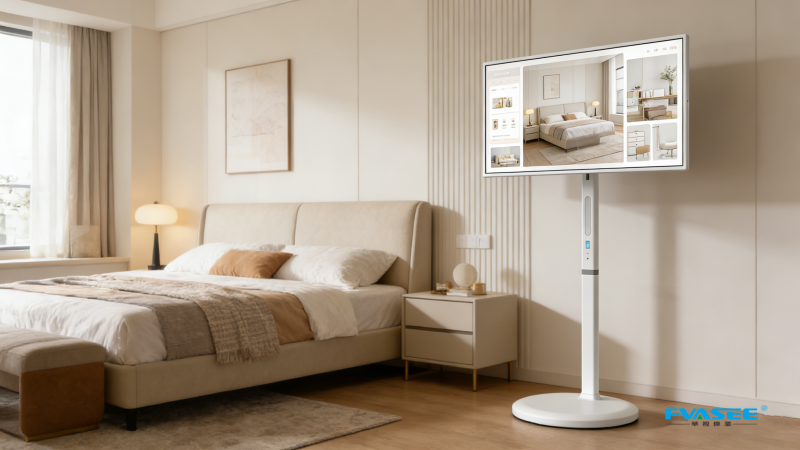
The FVASEE Portable Smart TV is designed to support flexible lifestyles, making it a practical solution for home workouts and wellness routines.
Core Features
* Full HD touchscreen display
* Android smart operating system
* Built-in rechargeable battery
* Adjustable height and rotation
* Mobile rolling stand
* Wireless screen casting
* Access to popular streaming and fitness content
These features allow users to create a personalized workout environment without investing in complex fitness equipment.
Portable Smart TV vs Traditional Workout Screens
| Feature | Smartphone / Tablet | Traditional TV | Portable Smart TV |
|---|---|---|---|
| Screen Visibility | Limited | Good | Excellent |
| Mobility | High | None | High |
| Adjustable Positioning | Limited | None | Yes |
| Workout Flexibility | Medium | Medium | High |
| Multi-Room Use | Yes | No | Yes |
| Fitness App Experience | Good | Good | Excellent |
Who Should Consider a Fitness Smart Display?
A portable smart TV is particularly suitable for:
* home fitness enthusiasts
* yoga and Pilates practitioners
* apartment residents
* users with limited workout space
* families sharing one display
* people following online fitness programs
Featured Snippet: Benefits of Using a Portable Smart TV for Home Workouts
A portable smart TV improves home workouts by providing a larger screen, adjustable positioning, wireless mobility, and direct access to fitness apps and streaming content. It allows users to follow exercise programs more comfortably and adapt the display to different workout environments, creating a more flexible and engaging fitness experience.
FAQ
Is a portable smart TV good for home workouts?
Yes. A portable smart TV offers a larger screen, flexible positioning, and access to workout apps, making it easier to follow fitness programs and training videos.
Can I use a portable smart TV for yoga classes?
Absolutely. Adjustable height and rotation make portable smart TVs particularly useful for yoga, stretching, and floor-based exercises.
Do I need a dedicated home gym to use a fitness smart display?
No. One of the main advantages is mobility. You can move the display between rooms and create a workout area wherever space is available.
What size screen is best for home fitness?
Most users find that screens between 24 and 32 inches provide a good balance between visibility, mobility, and space efficiency.
Can I stream workout apps directly on a portable smart TV?
Yes. Android-based portable smart TVs typically support streaming apps, workout videos, and wireless screen casting for fitness content.