Digital Display Systems for Outpatient Clinics and Ambulatory Care | FVASEE
Outpatient Digital Display Systems for Clinics and Ambulatory Care
Outpatient clinics and ambulatory care centers operate in a fast-moving environment where clarity, efficiency, and real-time communication are essential. Unlike inpatient hospitals, outpatient settings manage high patient turnover, tight schedules, and numerous touchpoints from arrival to discharge. In this context, digital display systems are transforming how information is delivered, workflows are coordinated, and patient experience is elevated across the entire care journey.
At FVASEE, we design and deploy outpatient display solutions tailored to these unique requirements — helping clinics communicate clearly, streamline operations, and create a more patient-centric environment.
The Role of Digital Displays in Outpatient Clinics
Digital display systems in outpatient settings serve as dynamic information hubs that guide patients and staff through various steps of care. They bring the right content to the right place at the right time, improving both operational efficiency and patient satisfaction.
Key roles include:
• Real-time wait and appointment updates – By showing queue status and estimated wait times, displays reduce uncertainty and anxiety while helping patients understand where they are in the care process.
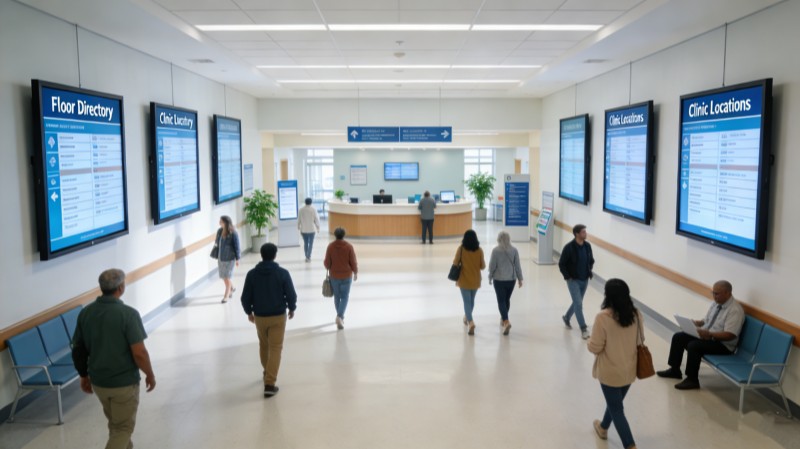
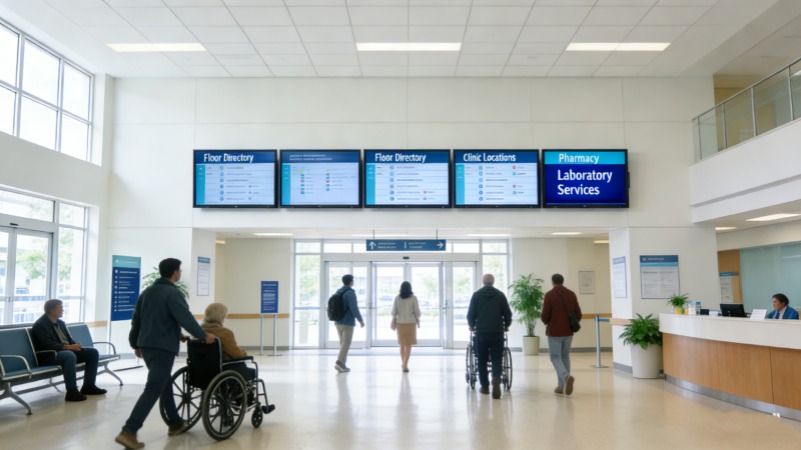
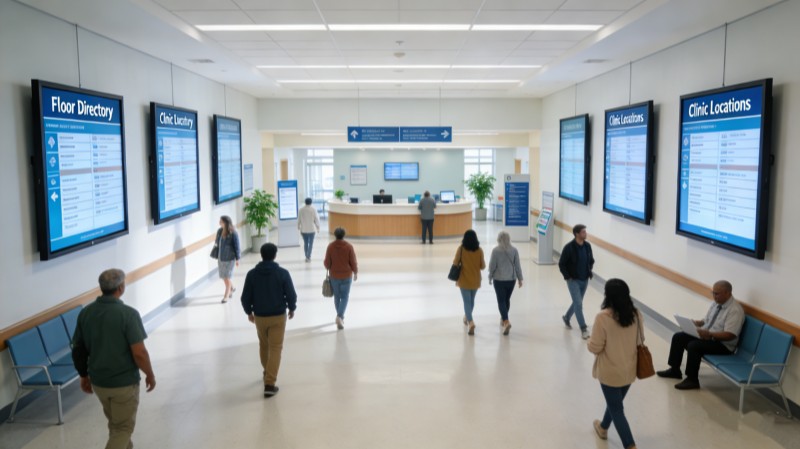
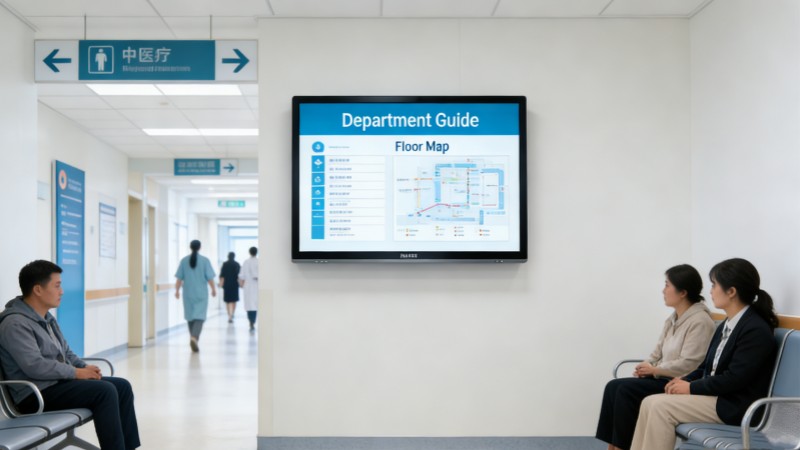
• Wayfinding and navigation guidance – Clinics can deploy directional signage and digital maps to guide visitors from check-in areas to consultation rooms or diagnostic zones.
• Operational messaging for staff – Digital bulletin boards help internal teams stay informed about scheduling changes, staffing updates, or logistics, reducing dependence on fragmented verbal or paper‐based communication.
• Educational and engagement content – Displays can provide wellness information, health tips, or clinic services while patients wait, which improves perceived wait times and enhances the overall environment.
Common Use Cases for Outpatient Displays
Outpatient settings include diverse clinical environments — from community health clinics and specialty practices to ambulatory surgical centers. Each has specific display needs, such as:
1. Waiting Area Displays
Waiting rooms are where patients spend much of their time before appointments. Displays here deliver useful information such as service announcements, average wait times, and engaging educational content that can make the wait feel shorter and less stressful.
2. Queue Management Screens
In clinics with multiple service points — such as lab, imaging, or consultation rooms — queue displays visually indicate the next patient position or where to proceed next. This reduces confusion at reception desks and helps staff manage patient flow more effectively.
3. Wayfinding and Directional Signage
Navigating a clinic can be challenging, especially for first-time visitors. Digital wayfinding displays placed at entrances and corridor intersections provide directions to exam rooms, restrooms, pharmacy areas, or administrative offices without front desk intervention.
4. In-Room or Pre-Consultation Displays
In smaller ambulatory spaces, screens near consultation areas can show relevant instructions, safety messages, or reminders about required documents or fasting requirements before procedures.
Benefits of Outpatient Display Systems
Improved Patient Experience
Digital signage significantly improves how patients perceive their care journey. Clear, up-to-date information reduces perceived wait times and patient anxiety while helping visitors understand what to expect next.
Operational Efficiency
Displays automate many routine communication tasks — such as queue updates or directional guidance — freeing up clinic staff to focus more on care delivery and less on repetitive inquiries.
Better Staff Coordination
Digital information boards make it easier for clinic teams to stay synchronized with operational messages, appointment changes, or safety notices, which contributes to more consistent care and fewer miscommunications.
Enhanced Professional Image
Modern, well-designed displays project a sense of organization and technology readiness that reflects positively on a clinic’s brand, reinforcing trust and professionalism in the eyes of patients and visitors.
Designing for Ambulatory Care Environments
Outpatient display systems need to meet the demands of busy, open clinical environments:
• Commercial-grade visibility: High-resolution screens with strong brightness ensure readability in waiting areas, hallways, or reception zones where lighting varies.
• Continuous uptime: Displays must be reliable for long hours of daily operation without interruptions.
• Centralized content management: Administrators can update messages remotely, schedule content, or push urgent alerts across multiple clinic locations, minimizing on-site technical effort.
Integration Across Healthcare Networks
Outpatient displays are most effective when they integrate into a broader healthcare communication ecosystem:
* Clinic entrances & lobbies: Provide real-time status updates
* Waiting areas: Educate, calm, and inform patients
* Staff zones: Share internal notices and schedules
* Wayfinding points: Reduce confusion and improve flow
When outpatient solutions are aligned with hospital-wide digital signage — such as ward, ICU, or telehealth displays — clinics can achieve a seamless information network that enhances both patient and staff experience.
Why Choose FVASEE Outpatient Display Solutions
FVASEE’s outpatient display systems are engineered with outpatient care patterns in mind. Our solutions emphasize:
* Clarity and relevance for busy clinical workflows
* Easy content control via centralized platforms
* Scalability for multi-site deployments
* Durable hardware built for daily, extended operation
These features ensure that clinics and ambulatory care centers remain organized, informed, and patient-focused, delivering an experience that aligns with modern healthcare expectations.