Enhancing Patient Flow with Digital Queue Displays in Clinics | FVASEE
Queue Management Digital Signage for Outpatient Clinics
In outpatient clinics and ambulatory care settings, managing patient flow efficiently is essential to both patient satisfaction and operational success. Traditional paper‑based queues, board lists, or verbal calls can lead to confusion, delays, and uneven workload distribution across staff. To address these challenges, an increasing number of clinics are turning to queue management digital signage — dynamic screens that communicate real‑time information and guide patients smoothly through every stage of their visit.
FVASEE’s queue management digital signage solution helps outpatient centers reduce perceived wait times, improve patient experience, and support staff with clear, centralized communication. By intelligently integrating clinic systems and visual displays, this solution transforms waiting areas into calm, predictable environments.
Why Digital Queue Displays Matter in Outpatient Clinics
Outpatient settings often deal with a high volume of short visits spread across multiple service points — registration, exams, labs, imaging, and checkout. In such a complex flow, traditional static methods frequently fall short:
* Confusion and bottlenecks at reception areas
* Frequent staff interruptions to answer questions about wait times
* Perceived delays that harm patient satisfaction
Digital queue displays address these issues by:
Real‑Time Patient Updates
Displays provide continuously updated queue positions and the next service point, reducing uncertainty for visitors.
Visual Call Systems
By showing which number or name is being served next, screens remove the need for repeated wake‑ups or loud audio announcements, creating a quieter, more comfortable environment.
Service Point Coordination
Displays can show staff availability, redirect patients to alternative counters, and balance workloads. This leads to more equitable distribution of effort among receptionists and clinicians.
Operational Efficiency
Because updates come from centralized scheduling or queue systems, staff can focus more on patient care and less on managing repeat inquiries.
Beyond these operational benefits, queue signage also supports patient education and engagement by displaying wellness content, safety tips, or clinic announcements while they wait, making perceived wait times feel shorter.
Typical Use Cases for Queue Management Digital Signage
Central Waiting Areas
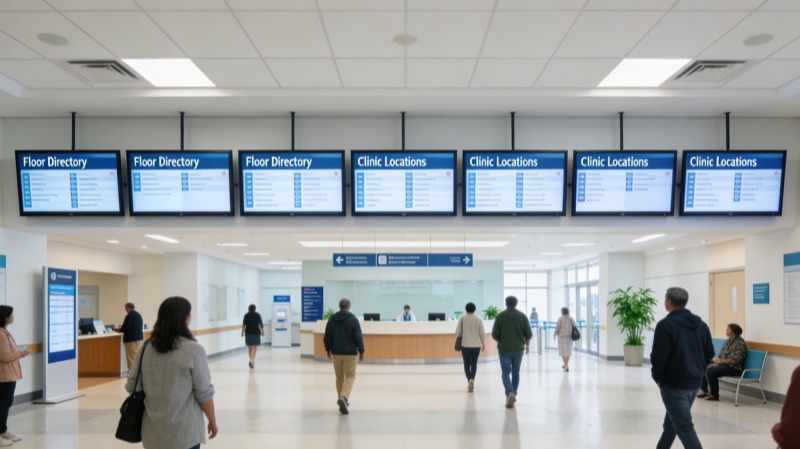
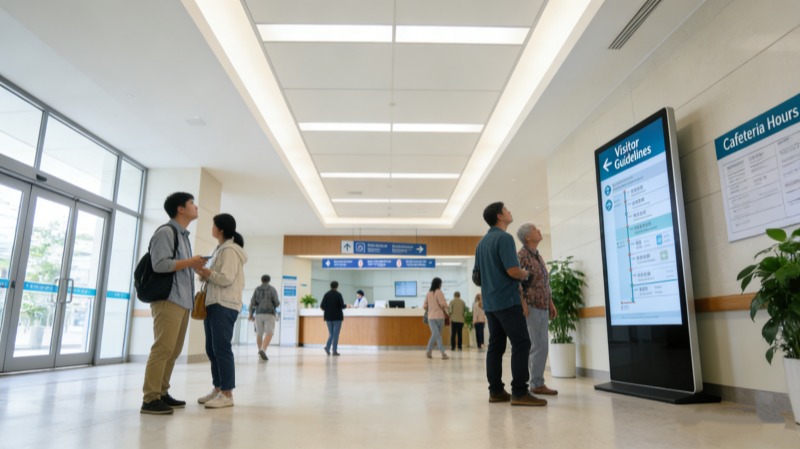
Large screens in main waiting rooms provide a clear view of current queue status for all patients, helping manage expectations from the moment visitors arrive.
Multi‑Service Points
For clinics with more than one service station (e.g., check‑in, lab, imaging), signage at each zone informs visitors where they should go next, reducing congestion and unnecessary walking.
Integrated Touchpoints
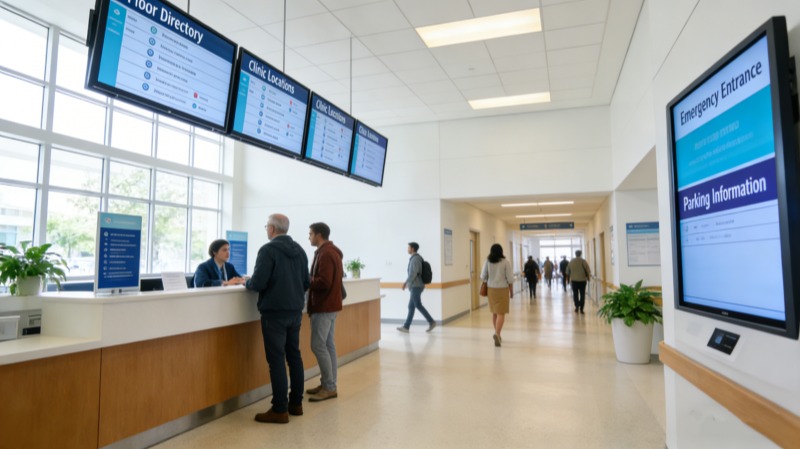
Screens at registration desks, corridors, and exam areas can push patient names/numbers and directions simultaneously, ensuring continuity of information from first contact to service completion.
Mobile Integration
Some advanced systems can push notifications to patients’ devices, but digital signage remains the primary visible cue that complements mobile alerts and maintains transparency.
Benefits for Patients and Clinic Operations
Enhanced Patient Experience
Seeing transparent, real‑time information reduces anxiety and uncertainty about wait times — a key factor in overall patient satisfaction. Displays also offer opportunities to share helpful wellness content while patients are waiting.
Reduced Administrative Load
When queues are clearly displayed and updated automatically, staff receive fewer repetitive questions, allowing them to focus on core clinical and administrative duties.
Improved Flow and Turnover
Well‑managed queues help smooth transitions between service points, promoting faster throughput and reducing overcrowding in common areas.
Consistent Messaging
Digital signage ensures all patients receive the same information simultaneously, reducing miscommunication and harmonizing expectations.
These benefits contribute not only to smoother daily operations but also to measurable improvements in efficiency and patient feedback scores.
What Makes FVASEE’s Solution Work
FVASEE’s queue management displays are designed specifically for healthcare environments:
High Visibility and Clarity
Screens are optimized for waiting rooms and corridors where lighting and distance vary, ensuring information is readable from different angles.
Centralized Content Control
Clinic administrators can schedule messages, update queue logic, and broadcast alerts from a single platform, reducing the need for local adjustments.
Seamless Integration
The system integrates with existing appointment and scheduling software to pull live data, reducing manual entry and risk of outdated information.
Scalability
Whether for a single outpatient clinic or a network of care locations, the solution scales easily with consistent management across all displays.
This combination of features ensures that the signage remains accurate, reliable, and aligned with real clinical workflows.
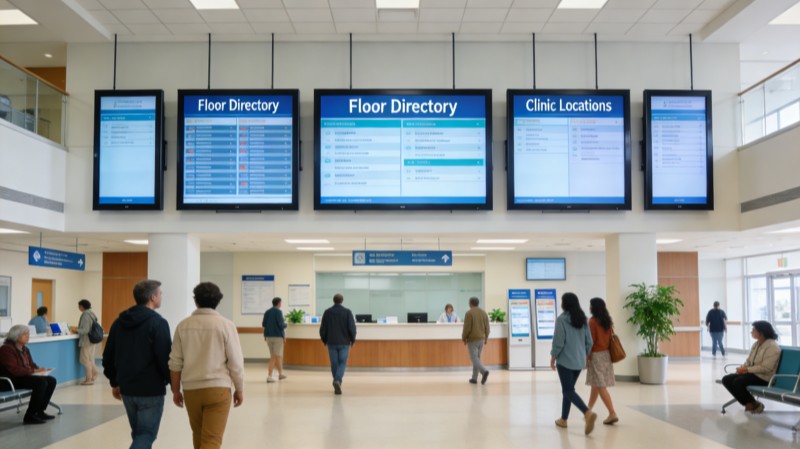
Creating Better Patient Journeys
In an era where patient experience increasingly influences care reputation and choice, intelligent queue management helps clinics compete by:
Reducing frustration caused by unclear wait times
Supporting a calm, organized waiting area
Allowing staff to deliver service with fewer interruptions
Showcasing professionalism and commitment to quality care
By adopting queue management digital signage, outpatient clinics can achieve a noticeable uplift in both patient satisfaction and operational clarity — a win‑win for providers and visitors alike.
Next Steps
If your outpatient or ambulatory care facility is seeking to improve patient flow, reduce congestion, and embrace digital communication, a queue management display system from FVASEE can be a practical, scalable solution that grows with your needs.