How Digital Displays Support Smart Patient Rooms in Hospitals
How Digital Displays Support Smart Patient Rooms in Hospitals
Modern healthcare facilities are undergoing rapid digital transformation — and nowhere is this more apparent than in patient room design. Today’s patient rooms are no longer limited to beds and medical equipment. Instead, they are being re-imagined as digitally enabled environments that enhance communication, support clinical workflows, and improve patient engagement throughout the stay.
Central to this transformation is the thoughtful integration of digital display technologies. From dynamic information boards to interactive all-in-one screens, digital displays play a strategic role in supporting caregivers and empowering patients. FVASEE digital display solutions are designed to support these needs, enabling hospitals to implement scalable, reliable, and future-ready patient room technologies.
Reimagining Patient Communication Beyond Static Boards
For decades, dry-erase boards were the primary tool used in patient rooms to list care team names, medication reminders, or discharge plans. However, these boards rely on manual updates and can become outdated within hours.
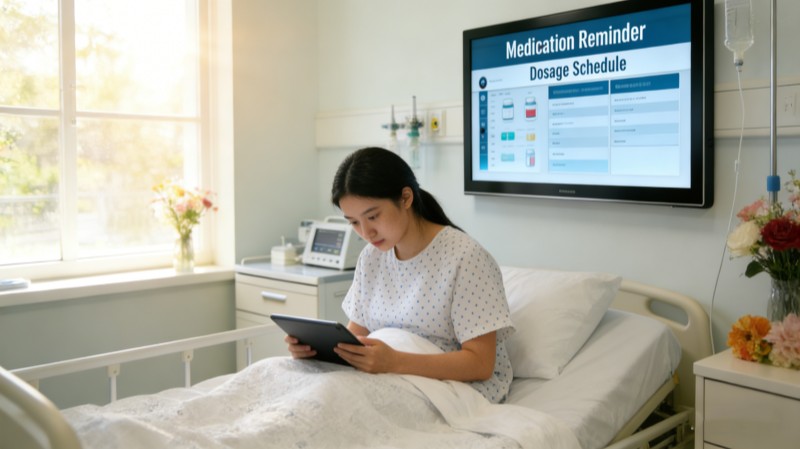
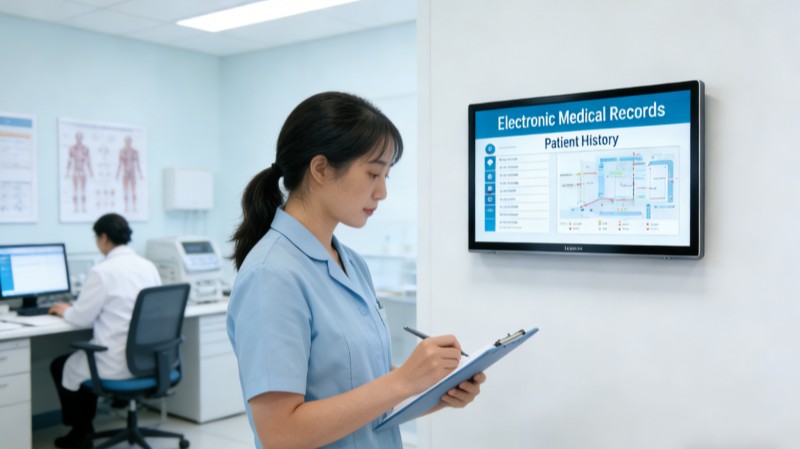
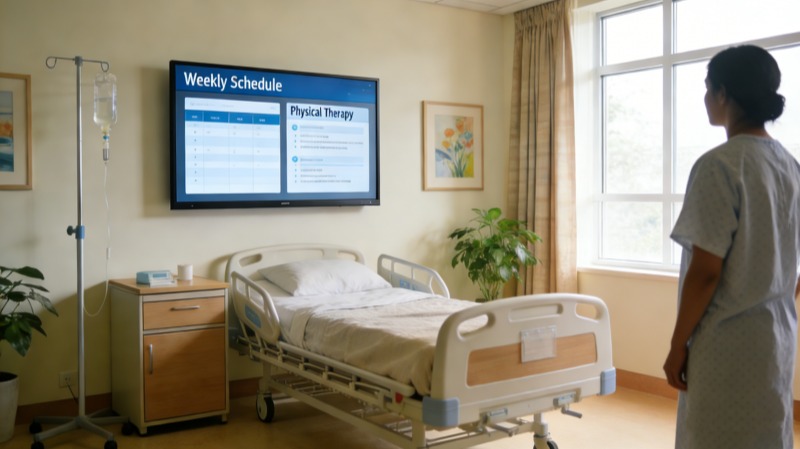
Digital displays provide a more effective alternative. By integrating with clinical systems like Electronic Health Records (EHR), digital patient room boards can present automatically updated information — including care team assignments, medication schedules, and daily care goals — without manual intervention. This reduces administrative workload and ensures information is current when accessed by patients, families, or care teams.
FVASEE solutions include digital signage and interactive displays that can be configured as automated information boards in patient rooms, giving staff and patients timely access to relevant care data.
Supporting Virtual Care and Telehealth Innovations
Telehealth has transformed how care is delivered, allowing clinicians to consult with patients, monitor progress remotely, and connect specialists virtually. Modern patient rooms are increasingly expected to support these capabilities.
Interactive displays with built-in camera support and web communication tools make it easy for clinicians to conduct virtual visits directly from the bedside. These displays also offer rich visual interfaces that can present diagnostic data, collaboration tools, and real-time communication platforms.
FVASEE interactive flat panel displays and all-in-one solutions provide the necessary functionality for telehealth integration, enabling hospitals to expand their virtual care capabilities within patient spaces.
Enhancing Patient Engagement and Experience
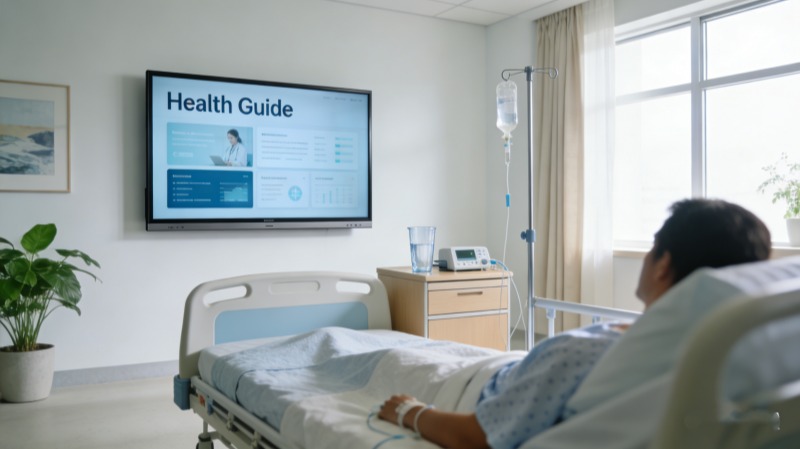
Patient satisfaction and engagement are deeply influenced by how informed and comfortable individuals feel during their hospital stay. Digital screens can offer more than clinical information — they can also provide entertainment, educational content, and personalized messaging.
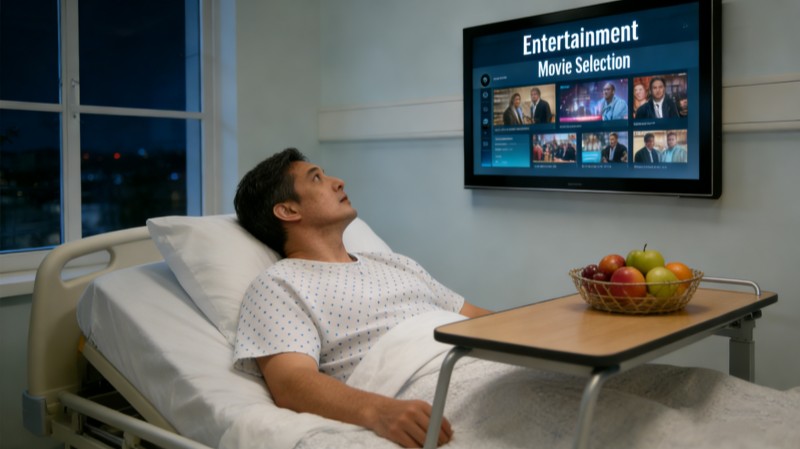
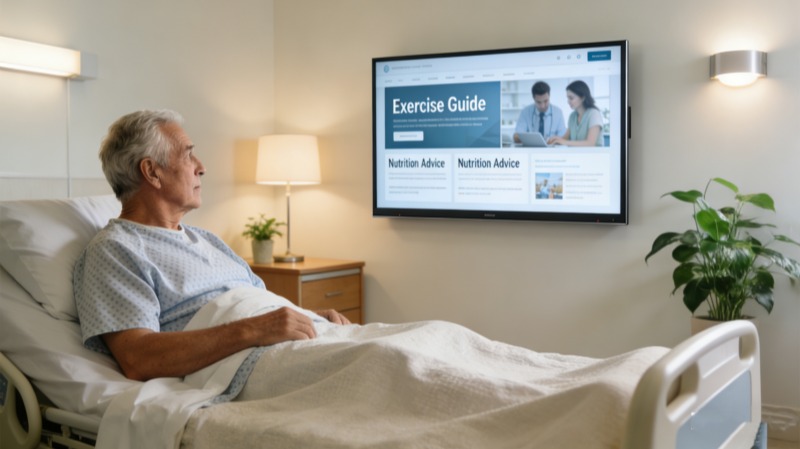
In-room digital displays can show educational videos about a patient’s condition, post-procedure care instructions, relaxation and wellness content, or even entertainment such as videos or streaming media. Research suggests that empowered and engaged patients often experience reduced anxiety and report higher satisfaction during their hospital stay.
FVASEE smart displays support multimedia content delivery, allowing hospitals to tailor visual information to individual patients or care units without complicated setup.
Giving Patients Control Over Their Environment
Next-generation patient rooms also prioritize patient autonomy. Integrating digital interfaces with room control systems allows patients to adjust temperature, lighting, or window shades directly from a screen, giving them more control over their comfort.
Digital display interfaces can also streamline service requests — such as requesting blankets, food, or assistance — reducing the number of redundant calls to the nursing station and freeing up clinical staff to focus on critical care.
FVASEE interactive display solutions can be configured to interface with room environmental controls and patient service platforms, enhancing both experience and operational efficiency.
Expanding Displays Beyond the Bedside
Patient room design should also consider the broader care environment. Displays can add value at strategic touchpoints throughout the facility:
Outside the room: Smaller digital screens can communicate safety protocols, dietary restrictions, or essential reminders for caregivers entering the room.
Nurses’ stations: Larger central displays can present clinician dashboards and patient updates, supporting coordinated care.
Waiting areas: Dynamic signage can inform visitors about patient status, estimated procedure times, or wayfinding directions.
Wayfinding zones: Interactive maps help patients and families navigate complex healthcare campuses with ease.
FVASEE digital signage systems can be deployed throughout the facility, ensuring information is consistent, current, and visually clear.
Designing for Integration, Scalability, and Future Proofing
Implementing digital displays in patient rooms requires thoughtful planning and design. Healthcare architects and facility planners should consider:
* Interoperability with existing clinical systems
* Scalability to support future expansion
* Ease of use for both patients and staff
* Flexibility to adapt content based on care needs
When digital displays are properly integrated and managed through centralized platforms, hospitals can create environments that not only support clinical workflows but also enhance the overall patient experience for years to come.
The next generation of patient rooms is defined by the seamless integration of digital technologies that improve communication, enhance engagement, and support care delivery. FVASEE digital display and interactive solutions equip hospitals with the tools needed to redesign patient spaces for the future — creating smarter, more connected, and more patient-centric environments.
Whether it’s delivering up-to-date care information, enabling telehealth encounters, or personalizing the patient experience, digital displays are an essential element in modern healthcare design.