FVASEE Bedside Digital Whiteboards | Smart Patient Room Display Solutions
Transforming Bedside Communication with Digital Display Solutions
In today’s healthcare environments, clear communication at the patient’s bedside is essential for safety, engagement, and coordinated care. Traditional dry‑erase boards — long used to list care team members, medication schedules, and daily goals — are intrinsically limited. They rely on manual updating, vary widely in clarity, and often fail to reflect real‑time changes in patient care.
As patient rooms evolve into digital care hubs, bedside digital whiteboards are replacing manual boards with reliable, automated systems that enhance communication, reduce errors, and improve operational efficiency. FVASEE digital display solutions offer scalable bedside display technologies tailored to modern healthcare needs.
Why Bedside Digital Displays Matter
The bedside is where care and communication converge. Nurses, physicians, and allied care teams depend on accurate information that reflects current patient status. Patients and their families also benefit greatly from visibility into care plans, team assignments, and daily routines.
Traditional methods struggle with:
* Delayed updates during shift changes
* Inconsistent information across rooms
* Legibility and human error
* Time‑intensive manual maintenance
Digital bedside whiteboards provide a better alternative — integrating directly with clinical systems to ensure content is always current.
What Are Bedside Digital Whiteboards?
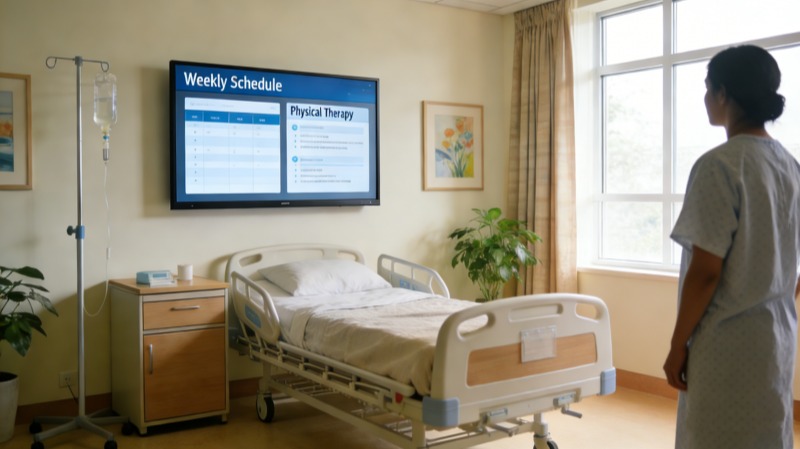
Bedside digital whiteboards are digital signage displays installed within patient rooms, typically positioned where patients and staff can easily view them. They display contextual information pulled from electronic health records (EHR), nurse call systems, and clinical content management systems.
Common content shown on digital bedside boards includes:
* Active care team members and roles
* Patient goals and daily tasks
* Medication schedules and reminders
* Discharge planning information
* Safety alerts and special precautions
These boards act as a shared reference point for both patients and caregivers, reducing confusion and improving transparency.
Improving Communication and Workflow
One of the biggest operational challenges in healthcare is ensuring that staff and patients are working from the same information. Bedside digital whiteboards help overcome this by:
* Centralizing care information in a readable format
* Reducing time spent on verbal repetition
* Providing standardized communication across shifts
* Enabling quicker updates from integrated systems
With digital display technology in place, clinicians spend less time updating boards and more time focused on direct patient care.
Enhancing Patient Engagement and Empowerment
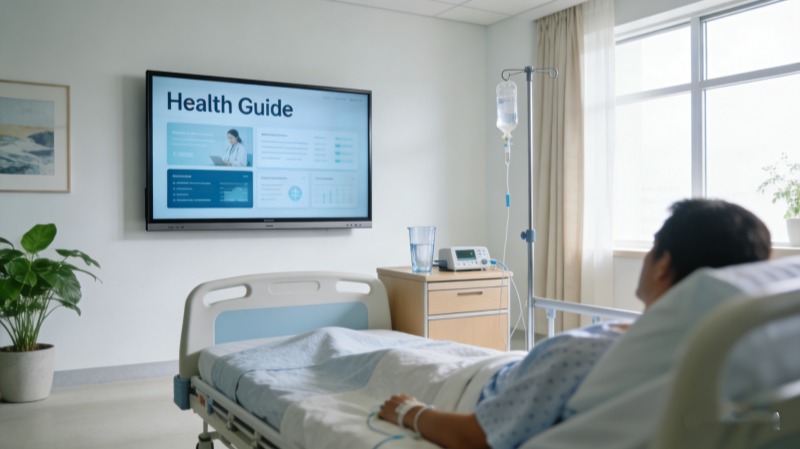
Patients and families often experience stress and uncertainty during hospital stays. Providing clear, up‑to‑date information at the bedside helps build confidence and engagement in the care process.
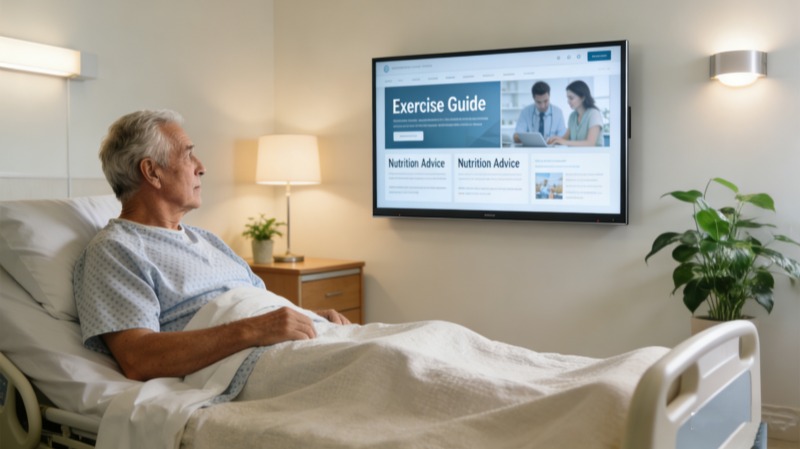
Digital whiteboards can enhance patient understanding by:
* Showing daily care plans in formatted visual layouts
* Displaying educational tips related to diagnosis or recovery
* Offering links to wellness and self‑care content
* Clarifying goals and expected care milestones
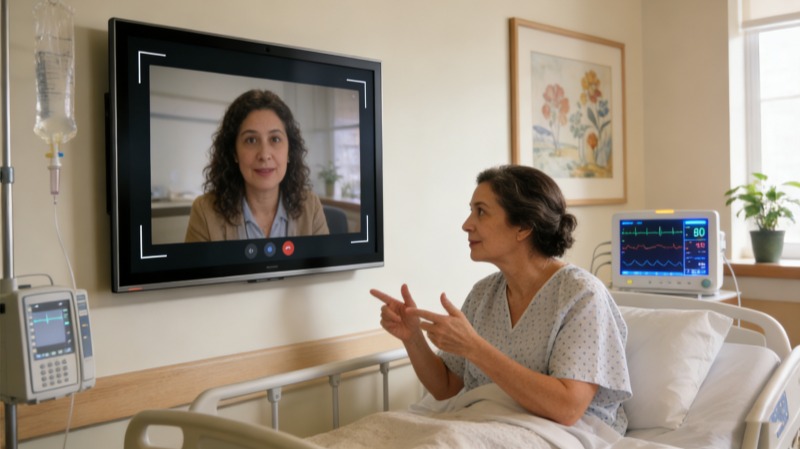
FVASEE displays also support multimedia content, including videos and diagrams, allowing hospitals to tailor patient education without additional devices or hardware.
Supporting Real‑Time Updates Through Integration
The value of a digital bedside whiteboard depends on how quickly and accurately it reflects real clinical data. Modern implementations rely on integration with back‑end systems such as:
* Electronic health records (EHR)
* Nurse call and alerting systems
* Clinical content databases
* Bed management and scheduling systems
By leveraging these data sources, bedside digital whiteboards can update automatically whenever a change occurs, eliminating the need for manual input.
FVASEE’s display solutions are designed to integrate with common healthcare IT systems, ensuring that bedside content stays reliable and relevant.
How Digital Bedside Boards Help Reduce Errors
Communication breakdowns contribute to a significant portion of medical errors. When vital information is unclear, outdated, or inconsistent, the likelihood of mistakes increases.
Digital whiteboards reduce these risks by:
* Presenting information in standardized formats
* Updating data automatically from authoritative sources
* Eliminating illegible writing or incomplete notes
* Enabling alerts and visual cues for critical changes
This clarity supports safer care decisions and smoother collaboration among care teams.
Design Considerations for Implementation
Installing digital whiteboards at the bedside requires thoughtful planning to meet clinical needs without disrupting the care environment. Key considerations include:
* Display size and visibility in different room layouts
* Mounting and placement to avoid clutter
* Infection control and cleaning protocols
* Network connectivity and system reliability
FVASEE bedside display systems are engineered with healthcare settings in mind, offering:
commercial‑grade displays suitable for 24/7 operation
smooth integration with hospital networks
centralized content management tools
easy‑to‑use interfaces for clinicians and patients alike
These design features help ensure that bedside digital whiteboards support workflows rather than complicate them.
Supporting Patient Experience Goals
Modern hospitals increasingly focus on patient experience as a key outcome metric. Accessible information at the bedside aligns with experience goals by:
* Reducing anxiety through clear communication
* Improving understanding of care plans
* Empowering patients to participate actively in their care
* Reinforcing expectations for recovery and discharge
Digital whiteboards help create a more patient‑centric environment that enhances satisfaction and trust.
Bedside digital whiteboards are more than an upgrade from traditional dry‑erase boards — they are an essential tool in the digital transformation of patient rooms. By integrating real‑time clinical data, improving information clarity, and supporting patient engagement, these displays help healthcare providers improve communication and reduce risk.
FVASEE digital display solutions are built to support modern patient room needs, offering reliable, integrated, and easy‑to‑manage bedside technologies that enhance care delivery and patient experience.