Why Modern Homes Prefer Portable Smart TVs Over Traditional Televisions
Why Portable Smart TVs Are Replacing Traditional TVs in Modern Homes
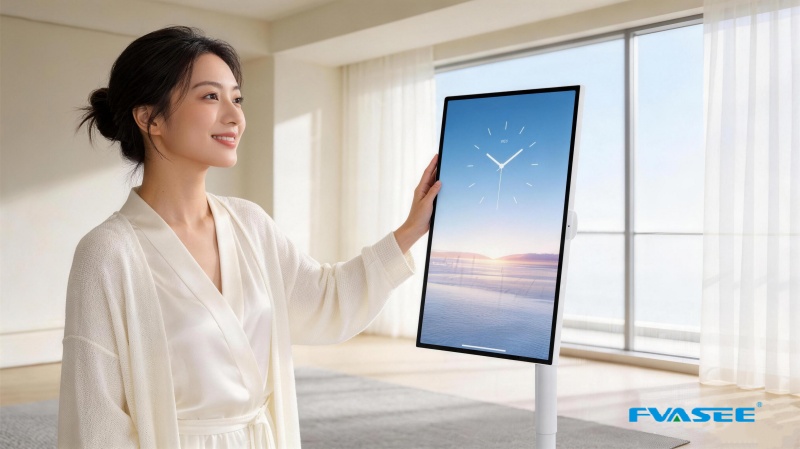
Portable smart TVs are redefining home entertainment by offering flexibility, mobility, and interactive capabilities that traditional fixed‑mount televisions cannot match. These mobile displays allow users to:
* move screens effortlessly between rooms
* share content wirelessly from smartphones, tablets, or laptops
* interact with apps and media via touchscreen
* adjust height, angle, and orientation for optimal viewing
Unlike conventional TVs that remain fixed to a wall or stand, portable smart TVs bring the screen to the user — whether in the living room, kitchen, bedroom, or home office. For many households, this shift is making portable smart TVs the preferred replacement for standard televisions.
Featured Snippet
Question: Why are portable smart TVs replacing traditional TVs in modern homes?
Answer: Portable smart TVs offer mobility, wireless connectivity, touchscreen interaction, and flexible viewing angles, allowing users to place the screen anywhere in the home and interact with digital content in ways that traditional fixed televisions cannot.
The Limitations of Traditional TVs
Traditional televisions have dominated home entertainment for decades, but they have several limitations in today’s dynamic lifestyle environments:
Fixed Installation
Standard TVs require installation on walls or stands, which makes them difficult to reposition once mounted.
Static Viewing Experience
Once installed, traditional TVs remain in one location and do not adapt to changing usage scenarios.
Dependence on Cables
HDMI, power, and media cables often clutter living spaces and limit flexibility.
Limited Interactivity
Most fixed‑mount TVs rely on remotes, offering minimal interactive features beyond basic navigation.
In modern homes where people stream content, join video calls, follow workout sessions, or use screens for recipe displays, these limitations are becoming more apparent.
The Rise of Portable Smart TVs
Portable smart TVs address the shortcomings of traditional displays by combining mobility, connectivity, and interactivity.
Easy Mobility Between Spaces
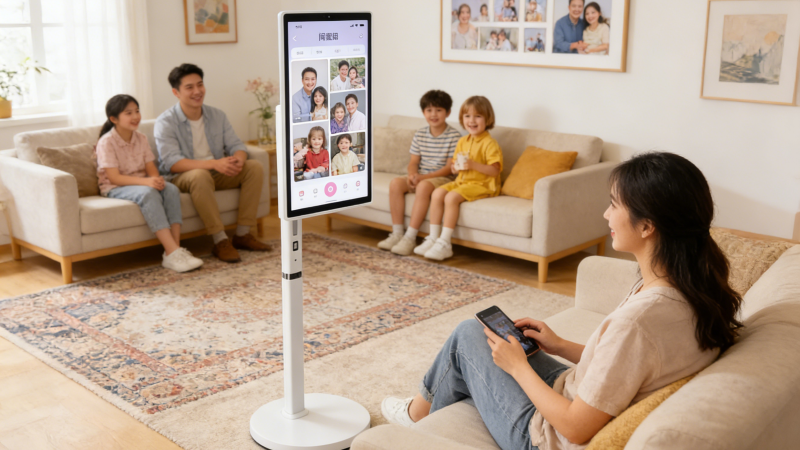
Mounted on stands with lockable wheels, portable smart TVs allow users to move the screen to any room in the house — from the living room to the bedroom, kitchen, or home office.
Interactive Touchscreen Capability
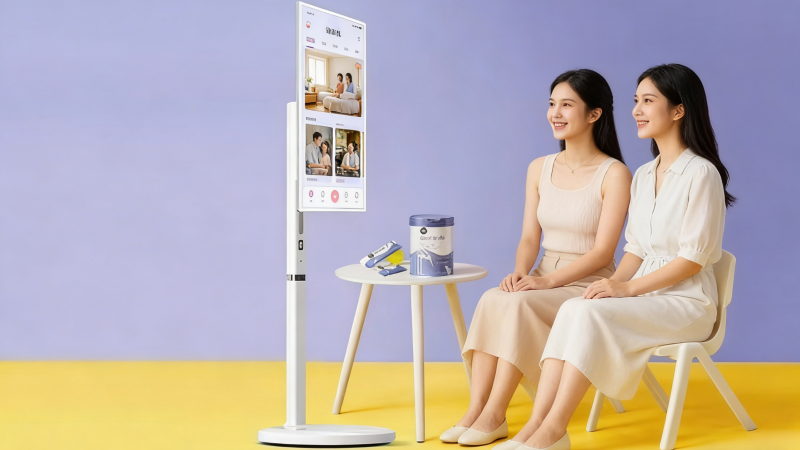
Many portable smart displays include touch functionality, enabling direct interaction with apps, streaming services, games, and content without needing a remote.
Wireless Casting and Connectivity
Portable smart TVs support wireless screen sharing from devices like smartphones, tablets, and laptops. This makes it easier to stream media, share photos, or mirror presentations.
Adjustable Viewing Angles
Height‑adjustable and rotatable screen stands allow users to optimize viewing positions, whether seated, standing, or gathering in groups.
Together, these features create a flexible display environment that fits modern lifestyle preferences.
Portable Smart TV Features That Matter
Mobility and Stability
Portable smart TVs use sturdy mobile stands with smooth wheels and secure locking systems, enabling smooth repositioning while ensuring stability.
Wireless Media Sharing
Users can stream content directly from their devices without worrying about cables or adapters.
Adaptive Screen Orientation
Flexible rotation and tilt allow screens to adapt to different activities and audience layouts.
Touchscreen Interactivity
Touch control adds a layer of engagement not available in standard televisions, making portable displays suitable for gaming, presentations, and interactive apps.
Integrated Smart Platform
Most portable smart TVs include built‑in smart platforms, enabling access to streaming services and apps without needing external devices.
Why Modern Homes Prefer Portable Smart TVs
1. Enhanced Flexibility
Users can move the screen wherever it’s needed — eliminating the boundaries of traditional living room setups.
2. Multi‑Purpose Use
A portable smart TV can serve as:
* a streaming entertainment hub
* a video conferencing screen
* a digital whiteboard during meetings
* a fitness training display
* a kid’s entertainment screen
3. Better Integration with Smart Devices
Portable smart TVs connect effortlessly with phones, tablets, and voice assistants for a fully integrated home experience.
4. Future‑Ready Home Entertainment
As smart home ecosystems evolve, portable displays provide a bridge between traditional TV watching and interactive digital experiences.
Comparing Portable Smart TVs with Traditional TVs
| Feature | Traditional TV | Portable Smart TV |
|---|---|---|
| Mobility | ✘ | ✔ |
| Wireless Casting | Limited | ✔ |
| Touchscreen | ✘ | ✔ |
| Adjustable Placement | ✘ | ✔ |
| Interactive Apps | Limited | ✔ |
Portable smart TVs outperform traditional TVs in environments where adaptability and interactivity are valued.
Ideal Scenarios for Portable Smart TVs
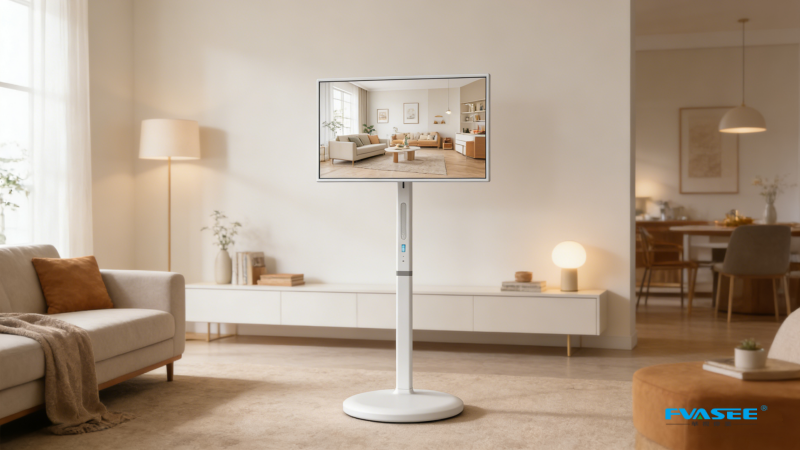
Home Living Rooms
Offer flexible entertainment that can move between shared spaces.
Home Offices
Serve as second screens for video meetings and screen presentation.
Kitchens
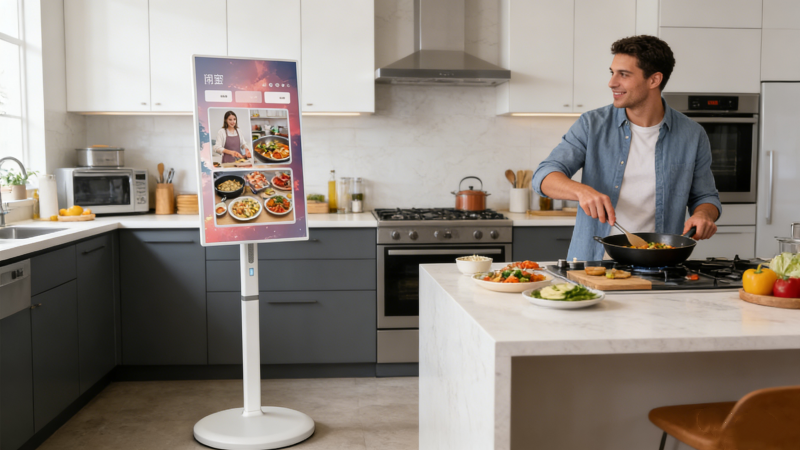
Provide cooking videos or recipes at eye level without occupying counter space.
Bedrooms
Deliver entertainment or relaxation content without fixed installation.
Multifunction Rooms
Portable smart TVs work across different rooms depending on household needs.
Why FVASEE Portable Smart Displays Stand Out
FVASEE portable smart TV systems are designed to support modern lifestyle demands with features tailored for flexibility and usability:
* Robust mobile stands with lockable wheels
* Adjustable viewing angles and screen rotation
* Wireless casting from multiple operating systems
* Interactive touch control for apps and media
* Multiple size options for different home layouts
These features make FVASEE portable smart TVs a strong choice for households seeking next‑generation entertainment and interaction.
Frequently Asked Questions
Q1: What is a portable smart TV?
A: A portable smart TV is a moveable display that can be easily positioned anywhere in the home. It includes smart features like apps, streaming, and wireless connectivity, often with touchscreen interactivity.
Q2: How is a portable smart TV different from a traditional TV?
A: Traditional TVs are typically fixed in one place and have limited wireless or interactive features. Portable smart TVs offer mobility, interactive touch control, and flexible wireless casting options.
Q3: Can portable smart TVs stream content like Netflix or YouTube?
A: Yes. Most portable smart TVs include built‑in smart platforms that support streaming services and popular apps.
Q4: Are portable smart TVs suitable for homes with kids?
A: Yes. Portable displays can be moved to play educational content, interactive games, or age‑appropriate streaming content in any room.