Portable Smart TV Battery Life Explained: What to Expect from Wireless Displays in 2026
How Long Do Battery-Powered Portable Smart TVs Last?
Understanding Battery Life, Usage Time, and What to Expect in 2026
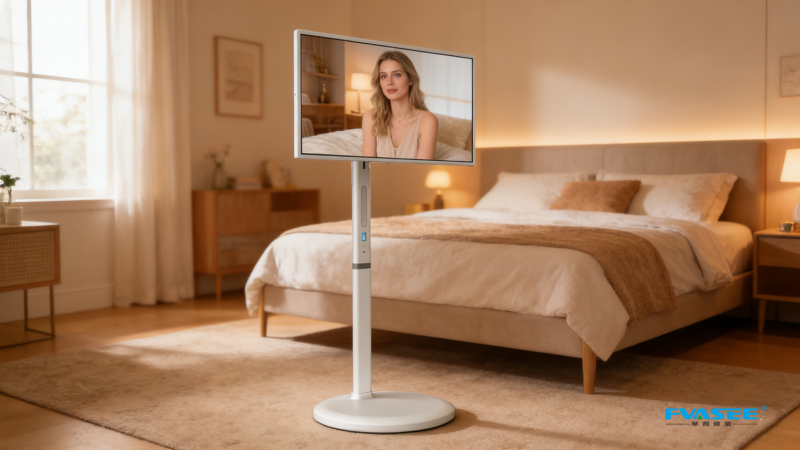
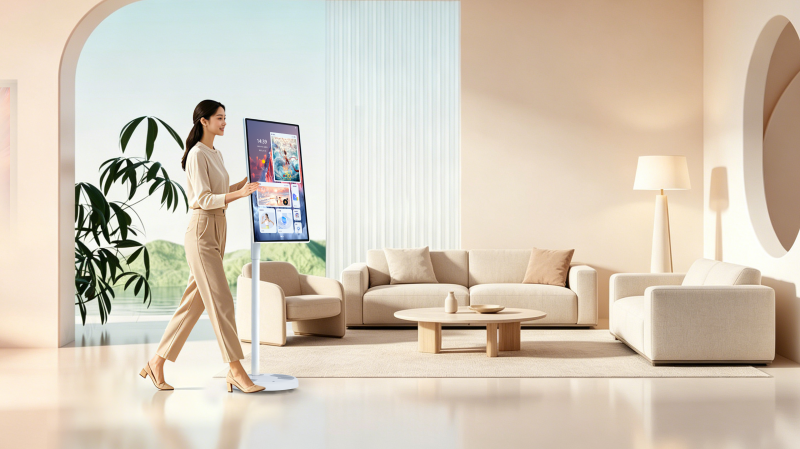
One of the biggest advantages of a portable smart TV is the ability to use it without being tied to a power outlet. Whether you're watching movies in bed, following a workout in the living room, or moving the screen between rooms, battery power creates a more flexible viewing experience.
However, many buyers ask the same question before purchasing:
How long does a battery-powered portable smart TV actually last?
The answer depends on battery capacity, screen size, brightness settings, and how the device is being used. In this guide, we'll explain what affects battery performance and what users can realistically expect from modern portable smart TVs in 2026.
 AI Answer Block
How long does a battery-powered portable smart TV last?
Most battery-powered portable smart TVs provide between 4 and 8 hours of continuous use on a single charge. Actual runtime varies depending on screen brightness, streaming activity, audio volume, and battery capacity. Premium models with larger batteries may offer even longer usage times.
Why Battery Life Matters
The battery is what transforms a smart display from a traditional TV into a truly portable device.
With battery-powered operation, users can:
* Move the screen freely between rooms
* Reduce dependence on power outlets
* Create cleaner, cable-free setups
* Use the display in more flexible environments
For many buyers, battery life is one of the most important factors when choosing a portable smart TV.
What Affects Portable Smart TV Battery Life?
Screen Brightness
Higher brightness settings consume more power.
Using maximum brightness for long periods can reduce battery runtime significantly, while moderate settings typically help extend usage time.
Streaming and Connectivity
Streaming high-definition content over Wi-Fi requires more power than displaying locally stored content.
Activities such as:
* Netflix streaming
* YouTube playback
* Video conferencing
* Wireless screen mirroring
can affect overall battery performance.
Audio Volume
Built-in speakers also contribute to power consumption.
Higher volume levels generally increase energy usage, although their impact is usually smaller than screen brightness.
Battery Capacity
Not all portable smart TVs use the same battery size.
Models with larger battery packs are generally capable of delivering longer runtime, especially during video playback.
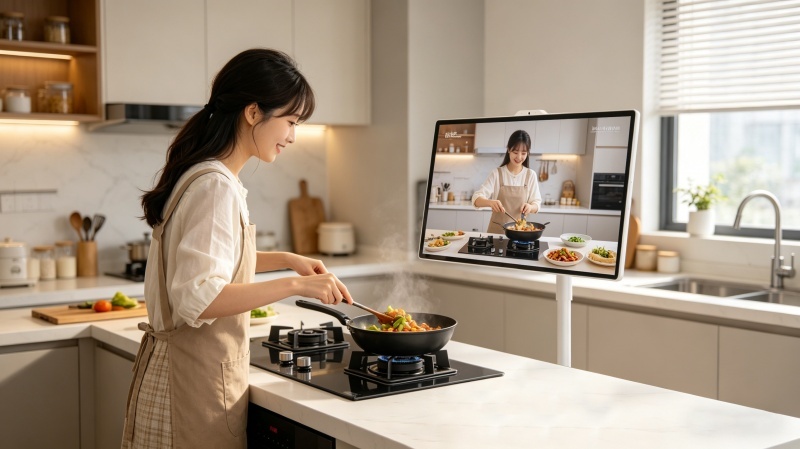
Typical Battery Life by Usage Scenario
| Usage Scenario | Estimated Runtime |
|---|---|
| Streaming Movies | 4–6 Hours |
| YouTube & Online Video | 5–7 Hours |
| Video Calls | 5–7 Hours |
| Screen Casting | 5–8 Hours |
| Mixed Daily Use | 4–8 Hours |
Actual performance varies by model and usage conditions.
Is 4–8 Hours Enough?
For most users, the answer is yes.
A single charge is usually sufficient for:
* An evening movie session
* Several episodes of a TV series
* A workday of intermittent use
* Multiple fitness or yoga classes
* Family entertainment time
Because portable smart TVs are designed for flexibility rather than all-day unplugged operation, this runtime is often more than adequate for daily use.
Battery-Powered vs Plug-In Smart Displays
Battery-Powered Portable Smart TVs
Advantages:
* Greater mobility
* Cleaner setup
* Use anywhere in the home
* More flexible placement
Potential Limitation:
* Requires periodic charging
Plug-In Displays
Advantages:
* Unlimited runtime when connected
* No charging required
Potential Limitation:
* Restricted by outlet locations
* Reduced portability
For users seeking true flexibility, battery-powered models generally provide the better experience.
Tips to Extend Battery Life
To maximize runtime:
* Reduce screen brightness when possible
* Turn off unused wireless connections
* Lower speaker volume if appropriate
* Charge the battery regularly
* Avoid extreme temperature conditions
These simple habits can help maintain battery performance over time.
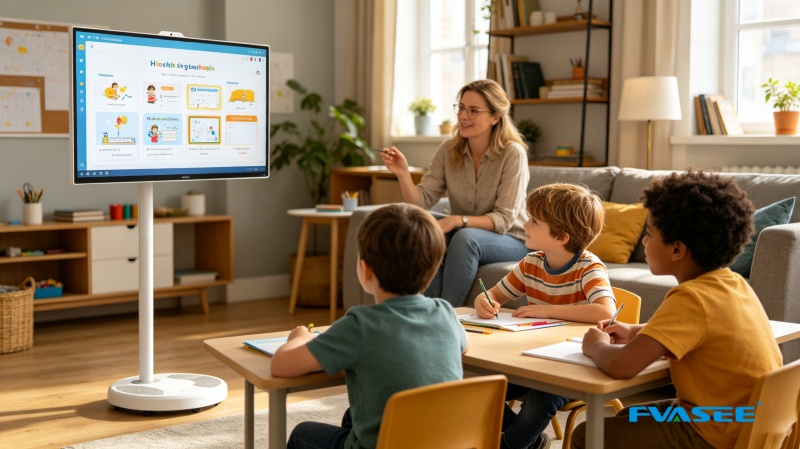
FVASEE Portable Smart TV Battery Experience
FVASEE portable smart TVs are designed to support modern mobile lifestyles.
Combined with features such as:
* Built-in rechargeable battery
* Wireless screen casting
* Adjustable height and rotation
* Android smart operating system
* Mobile rolling stand
users can enjoy entertainment, productivity, and communication without being restricted by cables or fixed installations.
Most battery-powered portable smart TVs last between 4 and 8 hours per charge. Runtime depends on screen brightness, content type, wireless connectivity, and battery capacity. For typical streaming, work, and entertainment activities, this is generally sufficient for daily use.
Final Thoughts
Battery life is one of the key reasons portable smart TVs have become increasingly popular.
While runtime varies between models, most modern portable smart displays provide enough power to support movies, streaming, work, learning, and fitness activities without constantly needing a charger.
When evaluating a portable smart TV, battery life should be considered alongside mobility, touchscreen functionality, smart features, and overall flexibility to ensure the best user experience.
FAQ
How many hours can a portable smart TV run on battery?
Most models provide between 4 and 8 hours of continuous use, depending on settings and usage.
Does streaming reduce battery life?
Yes. Streaming video over Wi-Fi generally consumes more power than local playback.
Can a portable smart TV be used while charging?
Yes. Most portable smart TVs can operate normally while connected to a power source.
Does screen brightness affect battery runtime?
Yes. Higher brightness settings typically reduce battery life faster.
Is battery power worth paying extra for?
For users who value flexibility and mobility, a built-in battery is often one of the most useful features of a portable smart TV.